
Thanksgiving is supposed to be about gratitude, family, good food, and maybe a little too much pie.
But somewhere between grocery shopping, cooking for hours, lifting a turkey, rearranging the dining room, traveling, cleaning up, and collapsing onto the couch, your body can start wondering what exactly it did to deserve this.
For many people, Thanksgiving back pain and holiday muscle tension are almost as predictable as leftovers.
The good news? A few simple changes can help you protect your back, neck, shoulders, and overall well-being throughout the holiday season.
At Levander Chiropractic & Massage, we want you to enjoy Thanksgiving without spending the next several days dealing with aches and stiffness. Here are some practical ways to take care of your body before, during, and after the holiday.
Why Thanksgiving Can Be Hard on Your Body

Think about everything your body does differently on Thanksgiving.
You may spend hours standing in the kitchen, bending over counters, lifting heavy cookware, carrying groceries, moving furniture, traveling, and staying on your feet much longer than usual.
Then comes the meal, followed by several hours sitting on the couch in a position your back probably wouldn’t choose for itself.
That combination can leave you feeling stiff, sore, and exhausted.
Common Thanksgiving activities that can lead to aches and pain include:
- Standing for hours: Long periods on hard kitchen floors can contribute to fatigue and discomfort in your feet, legs, and lower back.
- Bending and reaching: Repeatedly leaning into the oven, dishwasher, refrigerator, or lower cabinets can put extra strain on your back.
- Lifting heavy cookware: Turkey pans, Dutch ovens, serving dishes, and stockpots can be surprisingly heavy.
- Carrying groceries: Several bags of groceries can add up to a lot of weight, especially when carried unevenly.
- Moving furniture: Setting up extra chairs and tables can turn holiday preparation into an unexpected workout.
- Long car rides: Traveling for Thanksgiving can mean hours of sitting in one position.
- Couch time: After a busy day, it’s tempting to sink into the couch and stay there for hours.
None of these things are necessarily a problem on their own. The issue is that your body may not be accustomed to doing all of them in one day.
Holiday Stress Can Show Up in Your Body, Too
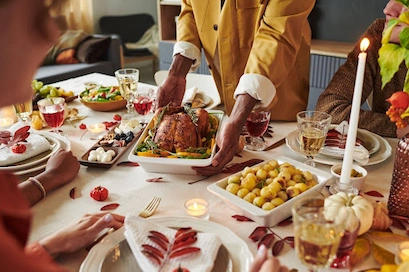
Thanksgiving isn’t just physically demanding. It can be stressful.
You’re coordinating schedules, preparing food, shopping, cleaning, hosting family, traveling, and trying to make everything feel special.
When you’re stressed, you may notice yourself tightening your shoulders, clenching your jaw, holding your breath, or sitting in a tense position without realizing it.
That can contribute to the familiar holiday combination of:
- Tight neck and shoulders
- Head and neck tension
- Achy lower back
- Muscle stiffness
- Jaw tension
- Trouble relaxing
- Feeling physically worn out
Stress management matters because taking care of your body isn’t just about what you lift. It’s also about giving yourself opportunities to move, rest, breathe, and recover.
How to Prevent Thanksgiving Back Pain
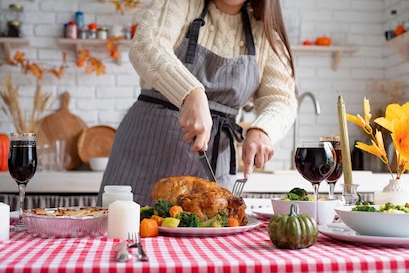
You don’t have to avoid the kitchen or skip your favorite Thanksgiving traditions to protect your back.
A few small adjustments can make a surprisingly big difference.
1. Don’t Stay in One Position for Hours
Whether you’re cooking or watching football, try not to stay in the same position all day.
If you’re cooking, change your stance and take short movement breaks. If you’re sitting after dinner, get up periodically and walk around.
Your body generally doesn’t love hours of uninterrupted standing or sitting.
2. Lift With Your Whole Body
That enormous roasting pan isn’t going to get any lighter just because you’re tired.
Before lifting something heavy, get close to the object, bend your knees, and use your legs rather than trying to lift everything with your back.
And if something is genuinely too heavy, ask for help.
There is no Thanksgiving trophy for carrying the turkey pan by yourself.
3. Keep Heavy Items Close to You
When you’re carrying a heavy pot, pan, box, or grocery bag, keeping it close to your body can reduce the amount of leverage working against you.
For groceries, consider dividing heavy items between multiple bags rather than loading everything into one.
4. Watch Your Kitchen Setup
If you’re cooking for several hours, pay attention to how you’re standing.
An anti-fatigue mat can make long periods of standing more comfortable. Keep frequently used items within easy reach so you’re not constantly bending, reaching, or twisting.
And if you have a kitchen counter that’s the wrong height for you, be especially mindful of how long you’re leaning over it.
5. Take a Walk After Dinner
A short walk after Thanksgiving dinner can be a simple way to get moving again after a long day of cooking and sitting.
You don’t need to turn it into a workout.
Just get up, stretch your legs, and take a few minutes to move.
Your body will probably appreciate it.
6. Don’t Forget Hydration
Between coffee in the morning, holiday drinks, and a busy schedule, it’s easy to forget about water.
Keep a water bottle nearby and make hydration part of your day instead of realizing at bedtime that you barely drank anything.
7. Give Yourself Permission to Rest
This one is important.
You don’t have to do everything.
If you’re hosting Thanksgiving, let someone else bring a side dish. Ask for help cleaning up. Sit down when you need to. Take a few minutes to yourself.
Taking care of your body also means recognizing when you’ve done enough.
How Massage Can Help During the Holiday Season
Sometimes your body needs more than a few minutes of stretching and a glass of water.
Massage therapy can be a helpful part of a self-care and recovery routine, particularly when holiday stress leaves your muscles feeling tight and tense.
Research on massage and stress has found short-term changes in some physiological measures following massage, although the evidence around cortisol specifically is mixed.
More importantly for everyday life, massage can provide dedicated time to slow down, relax, and address areas of muscular tension.
For people who tend to carry stress in their:
- Neck
- Shoulders
- Upper back
- Lower back
- Hips
a massage can be a welcome reset during a particularly busy time of year.
If you’ve been thinking, “I really need a massage, but I’ll schedule it after the holidays,” consider that your body might benefit from taking care of itself before the holiday rush gets even busier.
Don’t Wait Until You’re Hurting to Take Care of Yourself
November is also a good time to stay consistent with your regular chiropractic care.
If chiropractic care is already part of your wellness routine, keeping your appointments through the holiday season can help you avoid putting your normal routine on hold during the busiest time of year.
The same goes for massage.
It’s easy to cancel an appointment because Thanksgiving is coming, company is visiting, or the calendar suddenly looks completely ridiculous.
But taking care of yourself isn’t something you have to earn after everything else is finished.
It’s part of how you keep doing everything else.
A Simple Thanksgiving Body Checklist
Before the holiday gets hectic, keep this list handy:
☐ Take movement breaks while cooking
☐ Use good lifting technique
☐ Ask for help with heavy items
☐ Avoid spending hours in one position
☐ Take a short walk after dinner
☐ Drink plenty of water
☐ Make time to relax
☐ Keep your chiropractic appointment
☐ Schedule a massage if your muscles are feeling tense or overworked
Small choices can make the difference between enjoying Thanksgiving and spending Black Friday wondering why your lower back has declared war.
Give Your Body Something to Be Thankful For
Your body does a lot for you.
It gets you through long workdays, busy family schedules, grocery trips, cooking, cleaning, travel, and everything else life throws at you.
This Thanksgiving, don’t wait until your body is screaming for attention.
Give it a little attention now.
Whether you need chiropractic care, massage therapy, or simply a little help getting through the holiday season without feeling so beat up, the team at Levander Chiropractic & Massage is here to help.
Call 724-527-1700 or book your appointment online and make taking care of yourself part of your Thanksgiving plans. Helpful forms and FAQs can be found here.
Because you have enough to be thankful for.
You don’t need to add a Thanksgiving backache to the list.
Frequently Asked Questions About Thanksgiving Back Pain
Why does my back hurt after Thanksgiving?
Thanksgiving can involve several hours of standing, bending, lifting, carrying, traveling, and sitting. Doing more physical activity than your body is accustomed to can contribute to muscle fatigue and soreness.
How can I prevent back pain while cooking Thanksgiving dinner?
Take regular movement breaks, avoid prolonged bending, use proper lifting technique, keep heavy items close to your body, and ask for help when something is too heavy.
Can massage help with holiday stress and muscle tension?
Massage may help with relaxation and short-term changes in some measures associated with stress. Research on cortisol specifically is mixed, so it is better to think of massage as one part of a broader approach to managing stress and muscle tension.
Should I get a massage before or after Thanksgiving?
Either can make sense depending on what your body needs. A massage before Thanksgiving can give you time to relax before a busy holiday, while a massage afterward can be a way to recover and unwind.
When should I see a chiropractor for back pain?
If back pain is persistent, keeps returning, interferes with your normal activities, or concerns you, it’s a good idea to talk with a qualified healthcare professional about your symptoms and appropriate care.