
The first warm weekend of spring arrives in Western Pennsylvania, and suddenly everyone becomes a landscaper.
After months of winter inactivity, we head outside with the best intentions — cleaning flower beds, raking leaves, spreading mulch, trimming bushes, edging sidewalks, hauling soil, and preparing our yards for summer. Unfortunately, this sudden burst of activity is one of the biggest reasons we see an increase in yard work back pain every spring at Levander Chiropractic & Massage in Jeannette, PA.
What feels like productive outdoor work can quickly turn into days — or even weeks — of stiffness, inflammation, and limited mobility if your body isn’t properly prepared.
Understanding why spring back pain happens is the first step toward preventing it. Learn how chiropractic care can help you stay active this spring.
The “Weekend Warrior” Problem

During the winter months, activity levels naturally decrease. Even people who consider themselves moderately active tend to:
- Sit more
- Walk less
- Spend less time lifting or bending
- Avoid extended outdoor projects
Over time, this leads to mild but important changes in the body:
- Muscles lose endurance
- Core stabilizers become less responsive
- Hip mobility decreases
- Spinal joints stiffen
- Connective tissues lose elasticity
None of this feels dramatic — until you suddenly ask your body to perform three hours of repetitive yard work.
This is the classic “weekend warrior” pattern: minimal preparation followed by maximum output.
Your spine doesn’t have time to adapt to the sudden increase in workload. When physical demand exceeds tissue capacity, irritation occurs.
What Actually Happens in the Spine During Yard Work
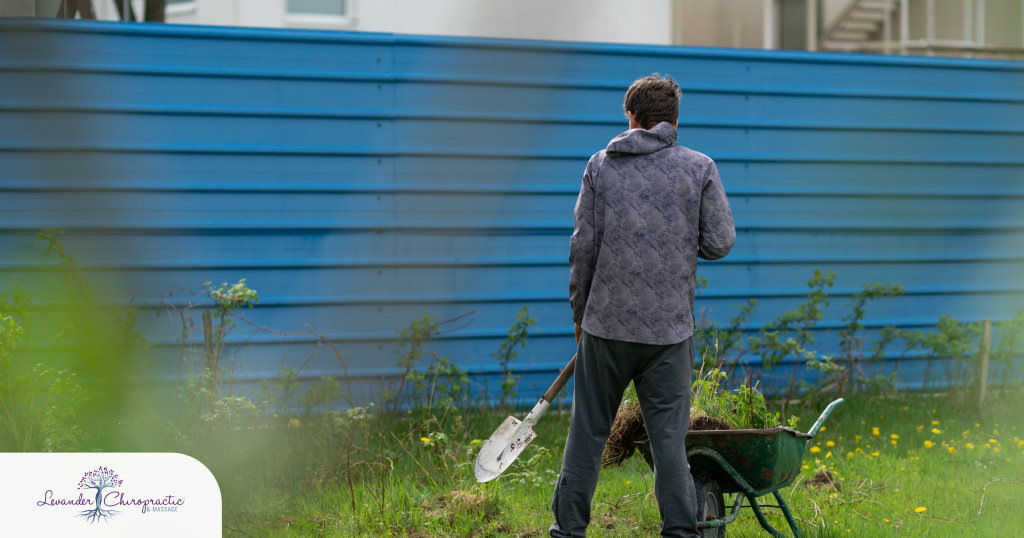
To understand yard work back pain, it helps to look at how the spine functions.
Your lower back (lumbar spine) is primarily designed for stability, not excessive rotation. The hips and mid-back (thoracic spine) are meant to handle most rotational movement.
But during yard work, several things happen:
- Tight hips limit rotation.
- The thoracic spine becomes stiff from winter inactivity.
- The lower back compensates by rotating more than it should.
Now add:
- Lifting weight
- Twisting while carrying
- Uneven ground
- Fatigue
This creates a combination of compression + rotation + repetition — which is one of the most stressful patterns for spinal discs and joints.
When this pattern repeats dozens (or hundreds) of times in a single afternoon, inflammation builds quickly.
Why Yard Work Is Harder Than Exercise
Many people assume yard work counts as exercise — and technically it is physical activity. But from a biomechanical standpoint, it’s far more unpredictable than structured training.
Exercise typically involves:
- Controlled movement
- Balanced muscle engagement
- Progressive loading
- Planned rest intervals
- Intentional form
Yard work, on the other hand, involves:
- Reaching forward for long periods
- Bending with rounded posture
- Carrying uneven loads (mulch bags, stones, soil)
- Sudden jerking motions while pulling weeds
- Twisting while shoveling
The lack of control is what makes yard work back pain so common.
You’re not just lifting — you’re lifting while rotated, fatigued, and often off balance.
The Most Common Yard Work Injuries We See

Each spring, patients describe similar symptoms. The most frequent include:
Low Back Muscle Strains
Repetitive bending overloads lumbar muscles. As fatigue sets in, the muscles tighten defensively, creating spasms and stiffness.
SI Joint Dysfunction
Uneven twisting irritates the sacroiliac joint, causing sharp or one-sided pain near the beltline.
Facet Joint Irritation
Excessive extension (leaning backward) or rotation can inflame small stabilizing joints in the spine.
Disc Flare-Ups
When compression and rotation combine, pressure inside spinal discs increases. For individuals with a history of disc bulges or herniations, this can trigger a recurrence.
Neck and Shoulder Strain
Forward head posture during gardening increases stress on the cervical spine, leading to headaches and upper back tension.
Why Pain Often Shows Up the Next Morning
Many people say, “I felt fine while I was working.”
That’s common.
During activity, blood flow increases and adrenaline reduces pain perception. After you stop:
- Muscles cool down
- Inflammation peaks
- Protective muscle guarding increases
- Joint stiffness sets in
Inflammation typically peaks 12–24 hours after overuse, which explains delayed soreness.
The Role of Core Stability
Your core muscles act like a natural brace for the spine. These include:
- Deep abdominal muscles
- Obliques
- Pelvic floor
- Multifidus (small stabilizers along the spine)
After winter inactivity, these muscles often lose endurance.
When core stability decreases, spinal joints absorb more stress during bending and lifting. Over time, this increases the likelihood of yard work back pain.
Even simple exercises like planks, bird-dogs, and glute bridges performed consistently before spring can significantly reduce injury risk.
The Biggest Mistakes That Lead to Spring Back Pain
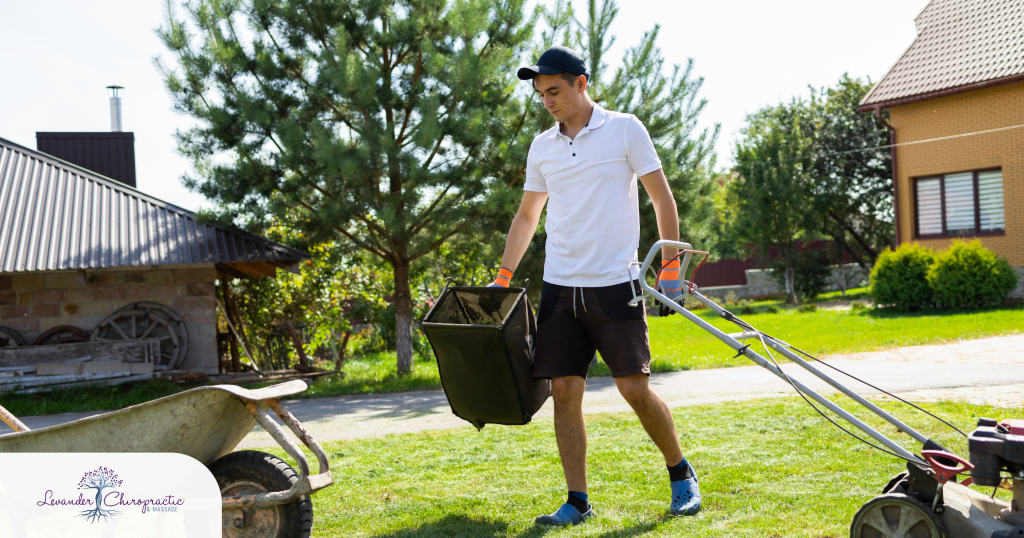
Patterns we commonly see include:
- Trying to finish everything in one weekend
- Lifting multiple heavy bags consecutively
- Working through fatigue
- Twisting instead of pivoting feet
- Ignoring mild discomfort early on
- Skipping hydration
Dehydration also affects spinal discs. Discs rely on proper hydration to maintain cushioning capacity. Working outdoors without enough water can subtly increase spinal stress.
How to Protect Your Spine During Yard Work

Here are practical, evidence-based strategies:
1. Warm Up Properly
Walk for 5–10 minutes before starting. Perform gentle hip circles and torso rotations.
2. Use Hip Hinging Mechanics
Instead of rounding your back, bend at your hips and knees. Keep your chest upright and the load close to your body.
3. Avoid Combined Bending and Twisting
Pivot your feet instead of rotating your spine while holding weight.
4. Break Tasks into Segments
Alternate between lifting, raking, and planting to avoid repetitive strain.
5. Take Scheduled Breaks
Rest every 20–30 minutes. Set a timer if needed.
6. Consider Supportive Footwear
Stable footwear improves alignment and reduces stress traveling up the kinetic chain.
Early Warning Signs You Shouldn’t Ignore
Small symptoms often precede larger injuries. Pay attention to:
- Stiffness lasting longer than 48 hours
- Sharp pain when standing from sitting
- Difficulty straightening up
- Pain radiating into hips or legs
- Recurrent pain every spring
The earlier irritation is addressed, the easier it is to resolve.
How Chiropractic Care Helps Yard Work Back Pain
When joints lose normal motion due to inflammation or strain, surrounding muscles tighten protectively. This creates a cycle of:
Restriction → Muscle guarding → Reduced mobility → More compensation
Chiropractic adjustments help restore normal joint motion, allowing muscles to relax and improving communication within the nervous system.
Patients often notice:
- Improved flexibility
- Reduced stiffness
- Decreased muscle tension
- Faster recovery after activity
Addressing minor issues early often prevents weeks of lingering discomfort. Interested in scheduling a treatment with Levander Chiropractic? Take a virtual tour before your appointment.
Long-Term Prevention: Preparing Before Spring Arrives
The best time to prevent yard work back pain is actually late winter.
Preparing your body can include:
- Regular walking
- Core strengthening exercises
- Hip mobility drills
- Periodic chiropractic check-ups
- Gradual exposure to lifting activities
Conditioning tissues before high-demand activity dramatically reduces injury risk.
Frequently Asked Questions
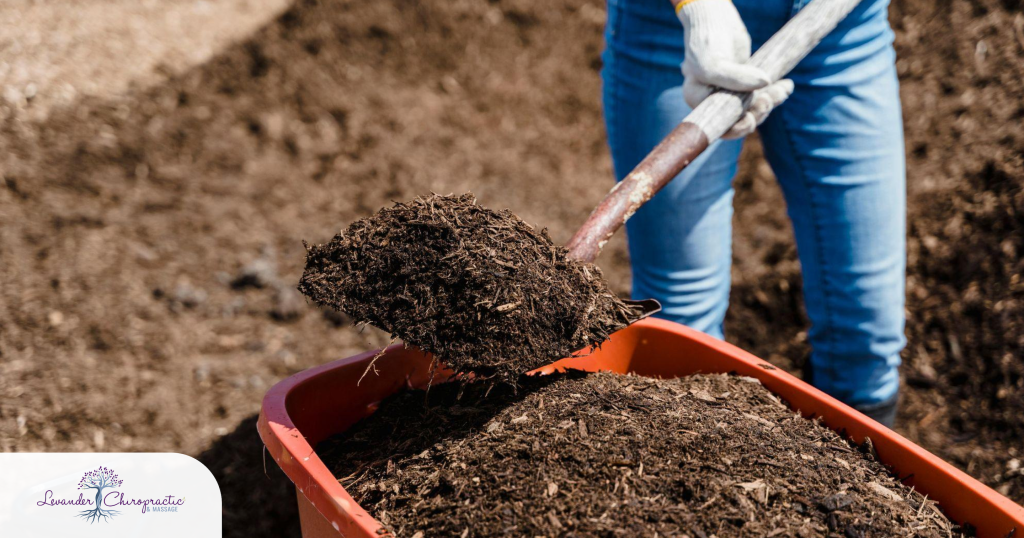
How long does yard work back pain last?
Mild muscle soreness may resolve in 3–5 days. Joint or disc irritation can last several weeks if untreated.
Should I rest completely?
Prolonged bed rest is not recommended. Gentle walking and light movement promote circulation and healing.
Is cracking my own back enough?
Self-manipulation may provide temporary relief but doesn’t correct underlying joint restriction patterns.
When should I seek professional care?
If pain limits movement, radiates into the leg, or persists beyond several days, evaluation is recommended.
Don’t Let Yard Work Ruin Your Spring
Spring in Western Pennsylvania is meant to be enjoyed — not spent recovering from preventable injuries.
If yard work leaves you stiff, sore, or limited in your movement, addressing the issue early can prevent long-term problems.
At Levander Chiropractic & Massage in Jeannette, PA, our goal is to keep you moving comfortably so you can enjoy everything the season has to offer.
Schedule an Appointment
If yard work left your back tight or painful, chiropractic care may help restore mobility and reduce stress on your spine.Call today to schedule your visit and stay active this spring.